Playroom Organization: The 4-Zone System That Stops the Chaos
You walk into the playroom and it hits you—again. Toys scattered across every surface, puzzle pieces mixed with building blocks, dress-up clothes tangled with art supplies. You spent an hour organizing this room just last weekend, and somehow it looks like a tornado went through it. Sound familiar?
If you’re a working mom trying to maintain some sense of order in your home, the playroom can feel like a losing battle. But here’s the truth: the problem isn’t your kids, and it’s not that you don’t have enough storage. The problem is that most playrooms lack a clear organizational structure that children can actually follow.
That’s where the 4-Zone System comes in. This playroom organization approach divides your space into four distinct activity zones, each with its own purpose and storage solution. Unlike complicated organizing methods that require constant maintenance, this system works with how children naturally play—making cleanup easier for them and sustainable for you.
In this guide, you’ll learn exactly how to implement the 4-Zone System in your home, regardless of your playroom size or budget. By the end, you’ll have a practical blueprint for creating a space that stays organized even with daily use.
Why Traditional Playroom Organization Fails
Before we dive into the 4-Zone System, it’s important to understand why your previous organizing attempts may not have lasted.
The “Everything in Bins” Approach Doesn’t Work
Many parents invest in matching bins and baskets, toss all the toys inside, and call it organized. The problem? When everything is mixed together, children can’t find what they want to play with, and they certainly can’t put things back correctly. A toy organization system needs to be specific enough that a child knows exactly where each item belongs.
Children Need Visual Clarity
Unlike adults, young children don’t think in abstract categories. They need to see where things go. If your storage system requires them to remember which unmarked bin holds the cars versus the trains, it’s too complicated. Effective playroom organization relies on clear visual cues—labels with pictures, open shelving where toys are visible, and designated spaces that make sense to a child’s brain.
Too Many Choices Create Overwhelm
Research shows that children play more creatively and clean up more willingly when they have fewer toys available at once. A playroom crammed with every toy your child owns doesn’t encourage play—it encourages chaos. The 4-Zone System addresses this by creating defined areas with curated toy selections.
Understanding the 4-Zone System
The 4-Zone System divides your playroom into four distinct areas based on the type of play that happens there. Each zone has specific storage solutions and organization rules that support that particular activity.
The four zones are:
- The Building Zone – for construction toys, blocks, and building sets
- The Creative Zone – for arts, crafts, and creative expression
- The Pretend Play Zone – for dress-up, dolls, action figures, and imaginative play
- The Active Zone – for physical play, games, and movement-based activities
This division isn’t arbitrary. It’s based on how children naturally gravitate toward different types of play and helps prevent the mixing of incompatible toys. When building blocks stay separate from art supplies, and dress-up clothes don’t end up in the puzzle bin, cleanup becomes exponentially easier.
Zone 1: The Building Zone
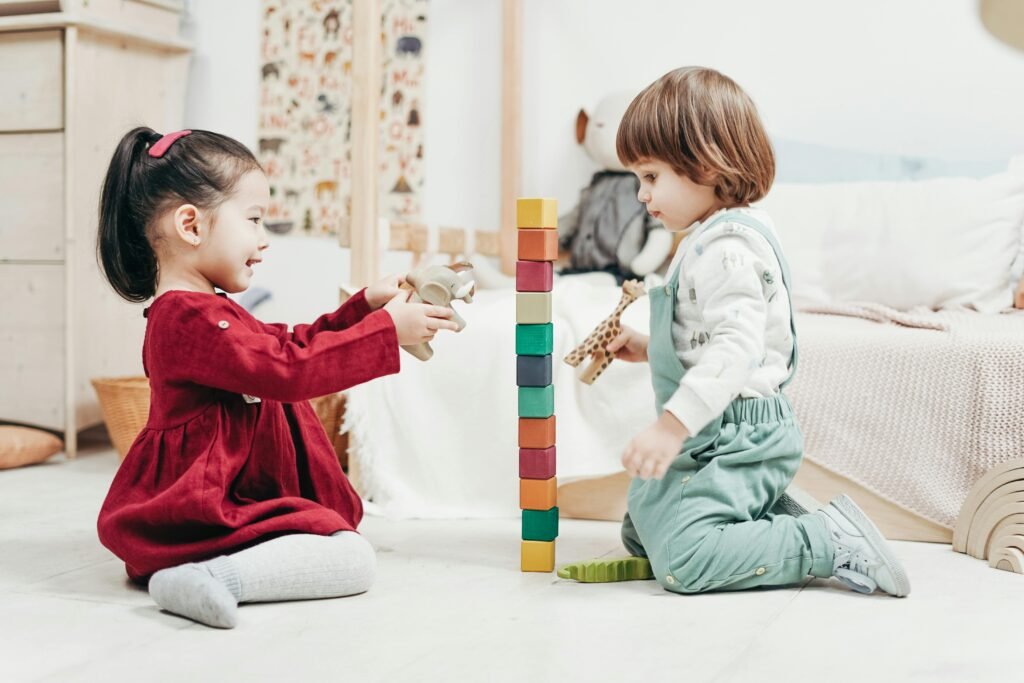
The Building Zone is dedicated to construction play—anything your child builds, stacks, or creates from individual pieces.
What Belongs Here
- Building blocks (wooden blocks, cardboard blocks, foam blocks)
- LEGO and similar interlocking brick systems
- Magnetic tiles and building sets
- Train sets and tracks
- Construction vehicles and playsets
- Marble runs or ball track systems
Storage Solutions for the Building Zone
Use clear, labeled containers with sorting systems. The key to organizing building toys is keeping different types separated. Mix all your LEGO together and you’ll spend hours searching for specific pieces. Here’s what works:
- Large, shallow bins for big building blocks—children need to see inside easily
- Drawer systems with labels for LEGO sorted by color or type (basic bricks, specialty pieces, minifigures)
- Baskets or bins for magnetic tiles, kept separate from other toys to prevent lost pieces
- Low shelving where completed creations can be displayed before being disassembled
Pro Tips for the Building Zone
Keep this area on a hard floor if possible. Carpeting makes building frustrating and cleanup difficult. If you have carpet, consider placing a large washable rug or play mat in this zone that can be easily cleaned.
Create a “building plate station” with LEGO base plates stored vertically in a dish rack or magazine holder. This keeps them accessible and encourages children to build on the plates instead of directly on the floor.
Establish a “keep or take apart” rule: If a child wants to save a creation, it goes on the display shelf. If the shelf is full, something must be disassembled to make room. This prevents dozens of partially-built projects from taking over your home.
Zone 2: The Creative Zone
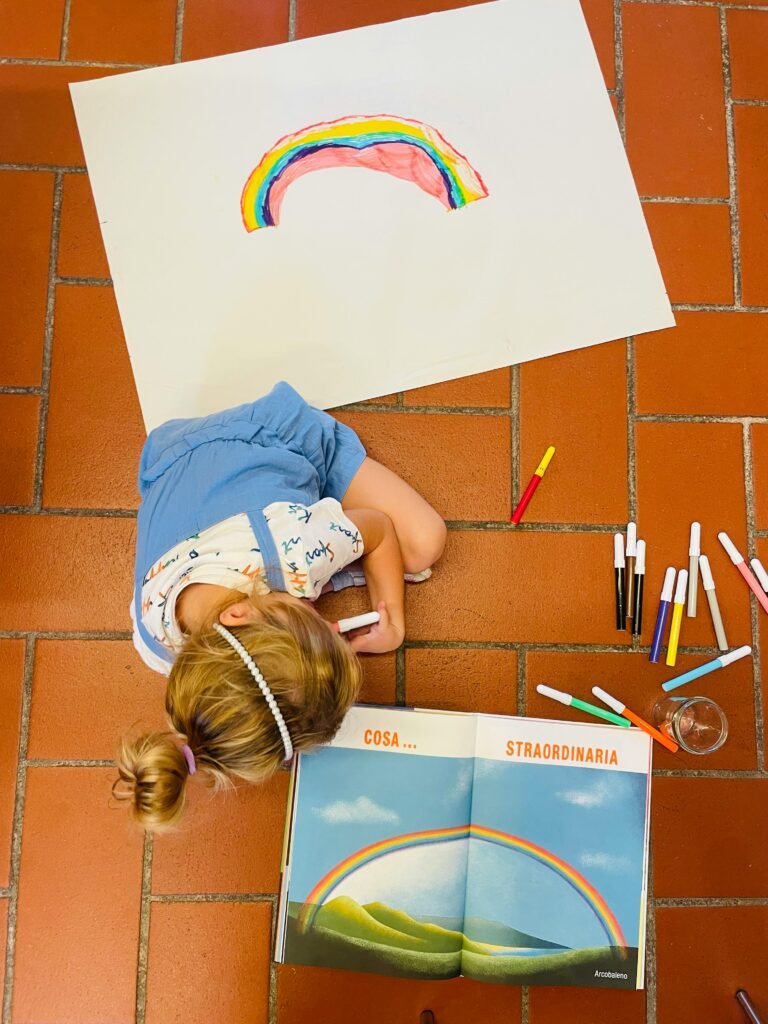
The Creative Zone supports artistic expression and crafting activities. This zone requires the most organization because art supplies can quickly become unusable when mixed together or improperly stored.
What Belongs Here
- Crayons, markers, colored pencils
- Paint and painting supplies
- Paper (construction paper, drawing paper, coloring books)
- Scissors, glue, tape
- Play-Doh and modeling clay
- Craft kits and supplies
- Stickers and stamps
Storage Solutions for the Creative Zone
Organization in the Creative Zone is about accessibility and preservation. Art supplies that are tangled, dried out, or missing pieces won’t get used.
- Caddies or divided containers for drawing tools—keep crayons, markers, and pencils separated
- Clear drawer units for paper, sorted by type and size
- Airtight containers for Play-Doh to prevent drying
- Tool organizers (like shower caddies or utensil holders) for scissors, glue sticks, and tape
- Wall-mounted solutions for frequently used items—hanging caddies or pegboards work well
Creating an Art Station
Designate a specific table or desk area within this zone as the art station. This isn’t just storage—it’s a functional workspace. Include:
- A wipeable tablecloth or mat to protect surfaces
- A small trash can within reach
- Paper towels or wipes for quick cleanup
- A drying rack or designated area for wet artwork
Managing Artwork Accumulation
Implement a display-and-rotate system. Use a wire display rack, clipboards on the wall, or a tension rod with clips to showcase recent artwork. When the display is full, photograph the pieces and create a digital album. Keep only truly special artwork in a memory box, and recycle the rest. This teaches children that art has value in the process, not just the product.
Zone 3: The Pretend Play Zone
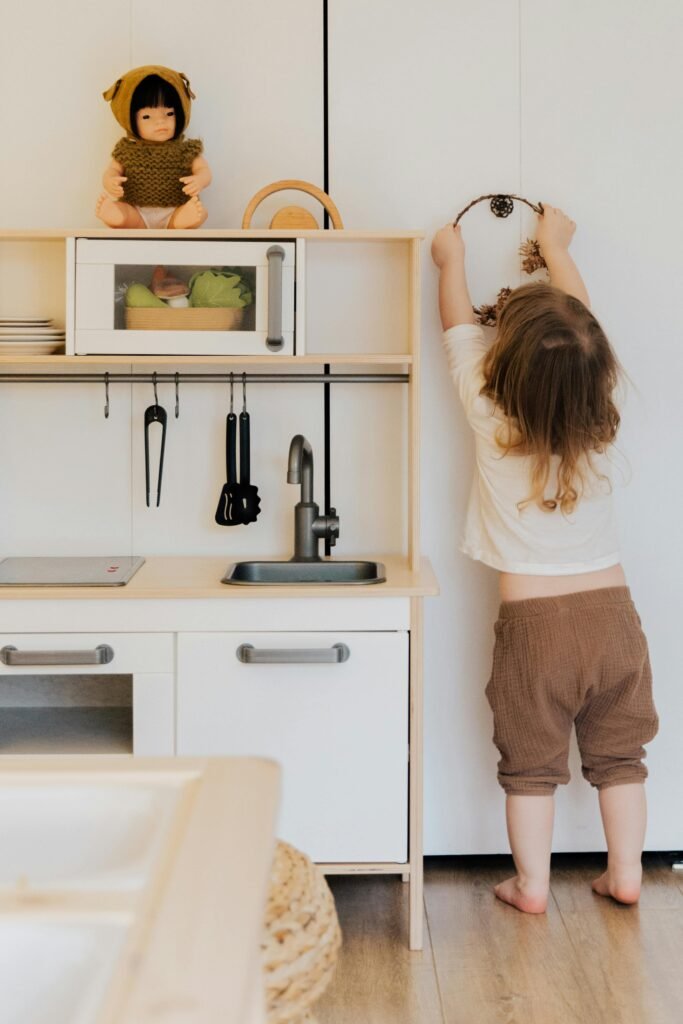
The Pretend Play Zone encourages imaginative play and role-playing activities. This zone often becomes the messiest because pretend play involves so many small pieces and accessories.
What Belongs Here
- Dress-up clothes and costumes
- Dolls and action figures
- Doll accessories (clothes, furniture, strollers)
- Play kitchen and food items
- Doctor kits, tool sets, and other role-play toys
- Stuffed animals
- Toy vehicles (cars, trucks, planes)
Storage Solutions for the Pretend Play Zone
The goal here is categorization. Each type of pretend play should have its own designated space.
- Low hanging rod or hooks for dress-up clothes—children need to access costumes independently
- Baskets or bins by category: one for dolls, one for doll clothes, one for action figures
- Small containers with lids for tiny accessories (doll shoes, toy food pieces, small vehicles)
- Mesh hammocks or hanging organizers for stuffed animals
- Shoe organizers work excellently for small toys—each pocket can hold different vehicles or figures
Organizing Specific Pretend Play Items
For play kitchens: Use the same organizing principles you’d use in a real kitchen. Small baskets or containers inside cabinets keep play food sorted (fruits in one, vegetables in another, breakfast foods separate from dinner items). This teaches organizational skills that transfer to real life.
For dolls and action figures: Store dolls separately from their accessories. Use zippered pouches or small boxes for each doll’s outfit and accessories. Label them with the doll’s name or a picture.
For dress-up clothes: Rotate costumes seasonally. Keep only 5-7 costumes accessible at a time. Store the rest in a separate closet and rotate quarterly. This prevents overwhelming choices and keeps costumes in better condition.
Zone 4: The Active Zone
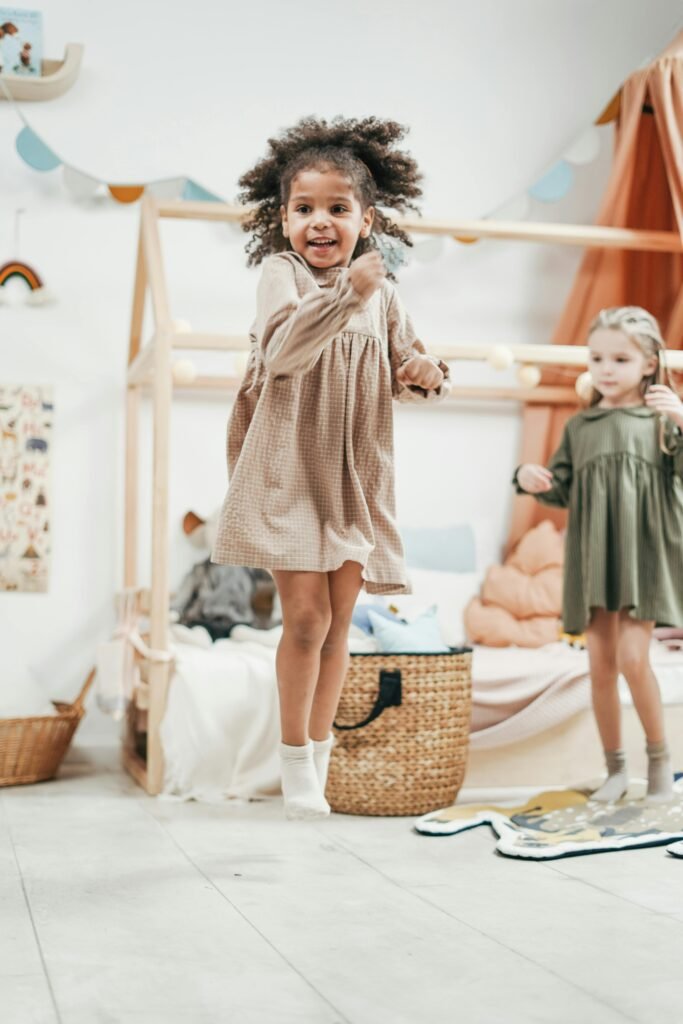
The Active Zone is for physical play and movement-based activities. This zone is often overlooked in playroom organization strategies, but it’s essential for burning energy and preventing restlessness.
What Belongs Here
- Balls (various sizes)
- Jump ropes and hula hoops
- Ride-on toys or scooters (if space allows)
- Board games and puzzles
- Musical instruments
- Active play equipment (bowling sets, ring toss, bean bags)
Storage Solutions for the Active Zone
This zone requires sturdy, accessible storage that can handle daily use:
- Large baskets or bins for balls—use one with ventilation to prevent moisture buildup
- Wall hooks for jump ropes and hula hoops
- Stackable puzzle storage or flat bins for puzzles, sorted by piece count
- Shelf system for board games, stored vertically like books so children can see the spines
- Hanging mesh bags for soft balls or plush toys used in active play
Creating Clear Floor Space
The Active Zone needs open floor space for movement. Don’t fill this area with furniture or storage units. Keep the center open and push storage to the perimeter. Use vertical storage solutions—wall-mounted baskets, tall narrow shelving, or over-door organizers.
Puzzle Organization Strategy
Puzzles are notoriously difficult to keep organized. Here’s a system that works:
- Store each puzzle in a large ziplock bag or flat container
- Take a photo of the completed puzzle and attach it to the outside of the storage bag
- Write the piece count on the bag
- Organize puzzles by piece count on your shelf
- Do a monthly “puzzle check” to verify all pieces are present
If a puzzle is missing pieces, throw it away immediately. Incomplete puzzles cause frustration and waste time.
Implementing the 4-Zone System: Step-by-Step
Now that you understand each zone, here’s how to transform your current playroom into this organized system.
Step 1: Empty and Sort (2-3 hours)
Remove everything from the playroom. Yes, everything. Sort all toys into the four zone categories plus a “donate/discard” pile. Be ruthless. Broken toys, toys missing essential pieces, and toys your children have outgrown all go.
Step 2: Assess Your Space (30 minutes)
Look at your empty playroom and determine the best location for each zone based on:
- Natural light: The Creative Zone benefits from good lighting
- Flooring: The Building Zone works best on hard floors
- Space requirements: The Active Zone needs the most open area
- Outlets: The Creative Zone may need outlets for craft tools
Sketch a simple floor plan showing where each zone will be located.
Step 3: Acquire Storage Solutions (varies)
Based on what you’ve sorted, purchase or repurpose storage containers. You don’t need to buy everything new. Shoe boxes, shipping boxes, and containers you already own can be covered with contact paper or wrapping paper and labeled.
Prioritize clear containers over opaque ones whenever possible. Seeing contents reduces frustration and improves cleanup compliance.
Step 4: Set Up Each Zone (2-4 hours)
Work on one zone at a time. Place storage solutions, organize toys within them, and create labels. Labels should include both words and pictures, especially for pre-readers. You can print images from the internet or take photos of the actual toys.
Step 5: Establish Zone Rules (15 minutes)
Create simple rules for each zone and review them with your children:
- Building Zone: Clean up before moving to another zone; creations stay in this area
- Creative Zone: All art supplies stay at the art station; nothing leaves this zone
- Pretend Play Zone: Costumes get hung back up; accessories return to their containers
- Active Zone: Balls go back in the basket; puzzles get checked for missing pieces before returning to shelf
Step 6: Implement a Toy Rotation System (ongoing)
Not all toys need to be accessible all the time. Keep 60-70% of toys in each zone accessible, and rotate the remaining 30-40% every 2-4 weeks. Store rotated toys in labeled bins in a closet or garage. This keeps the playroom from feeling overwhelming and makes “old” toys feel new again.
Maintaining the 4-Zone System
A toy organization system only works if it’s maintained. Here’s how to keep your zones functioning long-term.
Daily Reset (10-15 minutes)
Implement a daily cleanup routine before dinner or bedtime. Set a timer and make it a family activity. Younger children can focus on one zone while you handle another. The key is consistency—cleanup happens every single day, no exceptions.
Use the “home” language: Every toy has a home, and cleanup means taking toys home. This concrete concept works better for children than abstract ideas about tidiness.
Weekly Maintenance (20-30 minutes)
Once a week, do a deeper organization check:
- Verify labels are still attached and legible
- Check for broken toys or missing pieces
- Wipe down surfaces and containers
- Assess whether the current toy rotation needs refreshing
Monthly Assessment (1 hour)
Once a month, evaluate what’s working and what isn’t:
- Are certain zones consistently messier? Why?
- Have your children outgrown certain toys?
- Do you need additional storage in any zone?
- Is it time to rotate toys?
Be willing to adjust the system. As children grow and their interests change, your zones should evolve too.
Involving Your Children
The 4-Zone System works best when children understand and participate in maintaining it. Here’s how:
- Let them help with labels: Children who create labels (even simple drawings) feel ownership
- Give them decision-making power: Let them choose which toys to rotate or donate
- Use positive reinforcement: Praise specific organizational behaviors (“I love how you put all the markers back in the correct container”)
- Make cleanup achievable: Break tasks into small steps (“First put the blocks away, then the LEGOs”)
Don’t expect perfection. The goal is functional organization that reduces chaos, not magazine-worthy displays.
Adapting the System for Different Spaces
The 4-Zone System works in playrooms of all sizes. Here’s how to adapt it.
For Small Playrooms or Shared Spaces
If you don’t have a dedicated playroom:
- Combine zones: Merge Building and Active into one zone, Creative and Pretend Play into another
- Use vertical space: Floor-to-ceiling shelving maximizes storage without taking up floor space
- Implement strict toy rotation: Keep fewer toys out at once
- Use furniture with built-in storage: Ottoman storage, bench seating with bins underneath
For Large Playrooms
In bigger spaces:
- Create physical boundaries: Use area rugs to define each zone visually
- Add zone-specific furniture: A desk for the Creative Zone, a play kitchen for Pretend Play
- Include a reading nook: Add a fifth zone for quiet activities and books
- Leave empty space: Don’t feel obligated to fill every corner
Troubleshooting Common Challenges
Even with the best playroom organization system, you’ll encounter obstacles.
“My kids won’t clean up”
Solution: Make cleanup non-negotiable and consistent. Set a timer for 10 minutes before transitions (dinner, bedtime, leaving the house). No new activities until cleanup is complete. Stay in the room and work alongside younger children.
“Toys keep migrating to other zones”
Solution: This is normal. During daily reset, everything returns to its proper zone. If certain toys consistently end up in the wrong zone, consider whether they’re categorized correctly. Maybe your child uses toy cars in pretend play more than in active play—move them to the appropriate zone.
“I don’t have money for new storage”
Solution: The 4-Zone System doesn’t require expensive purchases. Use cardboard boxes, repurpose food containers, or check thrift stores and garage sales. Organization comes from the system, not from matching baskets.
“My children are different ages with different toys”
Solution: The zones still work. Within each zone, create age-appropriate subdivisions. In the Building Zone, toddler blocks on lower shelves, advanced LEGO sets higher up. Each child can use the same zones with their age-appropriate materials.
Conclusion
The 4-Zone System transforms chaotic playrooms into functional, maintainable spaces by working with how children naturally play and learn. By dividing your space into Building, Creative, Pretend Play, and Active zones, you create clear categories that children can understand and follow.
The success of this system relies on three key principles: specific categorization instead of generic storage, visual clarity through proper labeling and accessible placement, and consistent daily maintenance routines.
Remember, playroom organization isn’t about creating a perfect showroom. It’s about establishing a sustainable toy organization system that reduces stress, makes playtime more enjoyable, and teaches your children valuable life skills about caring for their belongings and maintaining their environment.
Your playroom won’t look organized every minute of every day—and that’s okay. The goal is a space that can be reset to order quickly and easily, over and over again. With the 4-Zone System, that half-hour cleanup marathon becomes a 10-minute daily routine.
Take the Next Step
Ready to bring this level of organization to other areas of your home? The principles that make the 4-Zone System work—specific categorization, visual clarity, and sustainable routines—apply to every room in your house.
Whether you’re tackling a cluttered kitchen, an overflowing closet, or a chaotic garage, professional organizing strategies can transform your spaces and reduce daily stress. Explore more home organization resources and expert guides to continue your journey toward a more organized, peaceful home. Your future self will thank you for the time you invest in creating systems that actually work for your family.