How to Create a Capsule Closet for Kids on a Budget
My daughter’s closet used to be stuffed with clothes she never wore.
Shirts with tags still on. Pants that didn’t fit right. Outfits I bought because they were “cute” but didn’t actually work with anything else. Every morning was a battle—nothing matched, half of it didn’t fit, and we’d end up late because she “had nothing to wear” despite a closet bursting at the seams.
Then I counted. 68 items. My six-year-old had 68 pieces of clothing, and she wore maybe 15 of them regularly.
I’d spent hundreds of dollars building a wardrobe that created stress instead of solving it. Meanwhile, laundry was constant, the closet was chaos, and I was buying more clothes every month because I could never find what we actually needed.
There had to be a better way.
That’s when I discovered the concept of a kids capsule wardrobe—a small, curated collection of clothes that all work together, fit properly, and get worn regularly. No excess. No waste. No more morning battles.
The transformation was immediate. We went from 68 items down to 25. Mornings became easier. Laundry became manageable. And somehow, my daughter had more outfit options than before because everything actually coordinated.
Best part? We did this on a tight budget. No expensive boutique clothing. No complete wardrobe replacement. Just strategic choices that minimize kids clothes while maximizing function.
In this post, I’m walking you through exactly how to create a capsule closet for your kids—even if you’re on a budget, even if you’re starting with an overstuffed closet, and even if your kids are hard on clothes.
Let’s simplify your kids’ wardrobes and save money in the process.
What Is a Kids Capsule Wardrobe?
Before we dive into the how, let’s clarify exactly what we’re creating.
The Core Concept
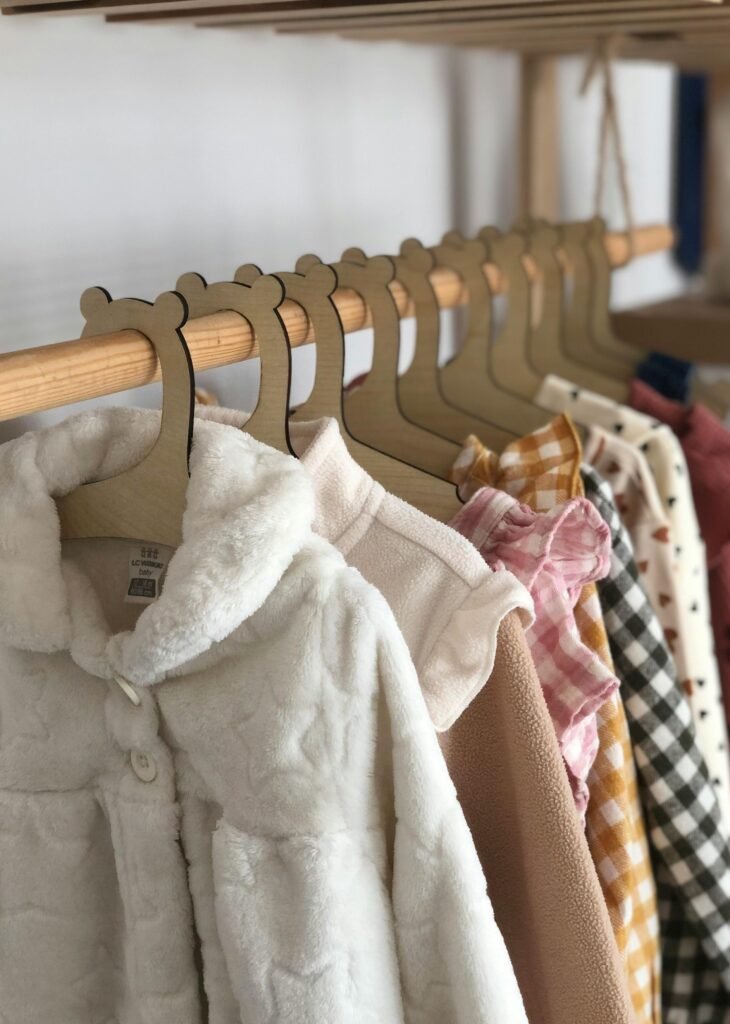
A capsule wardrobe is a small collection of essential clothing items that all coordinate with each other.
Instead of 60+ random pieces that don’t work together, you have 20-30 carefully chosen items that create dozens of outfit combinations.
For kids, this typically means:
- 5-7 tops
- 4-5 bottoms
- 2-3 layering pieces (cardigans, hoodies)
- 2-3 dresses or one-piece outfits (optional)
- 1-2 special occasion outfits
- Appropriate outerwear for season
- Basics (underwear, socks, pajamas)
Everything works together. Every top pairs with every bottom. Every outfit is weather-appropriate. Nothing sits unworn.
Why This Works for Kids
Kids don’t need variety—they need function.
They need:
- Clothes that fit
- Clothes they can put on themselves
- Clothes that survive play, spills, and washing machines
- Clothes appropriate for their daily activities
They don’t need:
- 15 different shirts
- Outfits they’ll wear once
- Complicated clothing that needs special care
- Clothes that only match one specific item
A capsule wardrobe delivers what they actually need and eliminates what just creates clutter.
The Benefits for Busy Moms
Creating a capsule closet for your kids means:
✓ Faster mornings – Everything matches, outfit decisions take seconds
✓ Less laundry – Fewer clothes means smaller, less frequent loads
✓ Lower costs – You buy less, buy better, and waste nothing
✓ Easier packing – Travel and overnight bags become simple
✓ Independent dressing – Kids can choose their own outfits successfully
✓ Reduced stress – No more “we have nothing to wear” despite full closets
This isn’t about restricting your kids. It’s about creating a system that actually works for your family.
Step 1: Assess What You Currently Have
Before you buy anything or purge everything, you need to understand your starting point.
The Closet Audit
Set aside 30-60 minutes. Pull everything out of your child’s closet and drawers.
Sort into these categories:
1. Fits perfectly and gets worn regularly
These are keepers. Your child reaches for these items consistently.
2. Fits but never gets worn
Why? Too uncomfortable? Doesn’t match anything? Wrong style? Be honest about whether this will change.
3. Doesn’t fit (too small)
Be ruthless here. If it doesn’t fit today, it needs to go today.
4. Doesn’t fit (too big)
One size up is fine to keep. Two sizes up is just taking up space.
5. Damaged, stained, or worn out
Unless you can actually repair it this week, it’s done.
6. Special occasion or seasonal
Holiday outfits, winter coat in summer, etc. Store separately.
Calculate the Real Numbers
How many items does your child actually have?
Count everything:
- Shirts/tops
- Pants/shorts/skirts
- Dresses
- Sweaters/hoodies
- Pajamas
- Underwear/socks
Most parents are shocked by the total. Kids often have 50-80+ items when they realistically need 20-30.
Identify the Gaps
What’s actually missing?
Look at the “fits perfectly and gets worn regularly” pile. Are there gaps?
Common gaps:
- Not enough pants (owns 12 shirts but 3 pants)
- Wrong season (all shorts in winter)
- Missing basics (runs out of underwear mid-week)
- No layering pieces for weather changes
Understanding these gaps prevents impulse buying later.
Step 2: Determine Your Capsule Size
How many clothes does your kid actually need?
The answer depends on several factors.
Laundry Frequency
If you do laundry twice per week:
- 6-7 tops
- 5-6 bottoms
- 2-3 layering pieces
If you do laundry once per week:
- 8-9 tops
- 6-7 bottoms
- 3-4 layering pieces
If laundry happens less frequently:
- Add 2-3 items to each category
You need enough clothes to get between laundry days comfortably—with a small buffer for accidents.
Activity Level and Mess Factor
Rough-and-tumble kids who get dirty daily:
- Add 1-2 extra “play clothes” that can get destroyed
- Keep total number the same but rotate clothes through “play clothes” category as they get stained
Kids who stay relatively clean:
- Smaller capsule works fine
- Clothes last longer across seasons
Your Child’s Age and Independence
Toddlers (2-4):
- Need extras for potty training accidents
- Simple, easy-on clothes only
- Capsule size: 8-10 tops, 7-8 bottoms
Elementary (5-10):
- More independent dressing
- Fewer accidents
- Capsule size: 6-8 tops, 5-6 bottoms
Tweens/Teens:
- Strong opinions about clothes
- Involved in capsule creation
- Capsule size: Varies based on their input
Seasonal Considerations
You’ll likely have different capsules for different seasons:
Summer capsule: Shorts, t-shirts, tank tops, sandals
Winter capsule: Pants, long sleeves, sweaters, boots
Transition seasons: Mix of both, layering pieces important
Plan for 2-3 seasonal capsules per year rather than one year-round wardrobe.
Step 3: Choose Your Color Palette
This is the secret to making everything match.
The 3-Color Formula
Every successful capsule wardrobe is built on 3 core colors:
- One neutral base (black, navy, gray, tan, white)
- One secondary neutral or color (another neutral or muted color)
- One accent color (brighter color for personality)
Example palettes:
Palette 1:
- Navy (base)
- Gray (secondary)
- Red (accent)
Palette 2:
- Black (base)
- White (secondary)
- Pink (accent)
Palette 3:
- Tan/khaki (base)
- Olive green (secondary)
- Orange (accent)
Why this works: Every single item you buy must be in one of these three colors. This guarantees everything matches everything else.
Involving Your Child
For kids old enough to have opinions (age 4+), let them help choose:
Your job: Narrow down to 2-3 palette options
Their job: Choose which palette they like best
Result: Buy-in and cooperation instead of resistance
Example conversation:
“We’re picking colors for your new closet! Do you want blue and green, or pink and purple, or red and gray?”
They feel ownership. You maintain control over functionality.
Patterns and Prints
Keep it simple:
80% solids in your three colors
20% simple patterns (stripes, small prints) that include your color palette
Avoid:
- Large character graphics (limit coordination)
- Loud prints that clash with everything
- Trendy patterns that date quickly
Exception: If your child has a beloved character/interest, allow 1-2 items. Just keep them in your color palette.
Step 4: Build Your Budget Capsule Wardrobe
Now we get to the actual buying—strategically and affordably.
Where to Shop on a Budget
Forget expensive boutiques. Budget-friendly options work perfectly for kids’ capsules.
Best sources:
1. Thrift stores and consignment shops
- Gently used clothes for $2-5 per item
- Often name-brand items at fraction of cost
- Shop frequently for best selection
2. Old Navy, Target, Walmart
- Affordable basics in solid colors
- Frequent sales (never pay full price)
- Decent quality for the price
3. Amazon Essentials
- Multi-packs of basics (5-pack t-shirts for $15-20)
- Solid colors available
- Free returns with Prime
4. End-of-season clearance
- Buy next year’s size at 60-80% off
- Stick to classics and your color palette
- Store until needed
5. Hand-me-downs from friends/family
- Free is the best price
- Only accept items that fit your palette and needs
- Don’t feel obligated to keep everything offered
The Essential Shopping List
Here’s what to actually buy for a basic kids capsule wardrobe:
Tops (6-8 items):
- 3-4 short-sleeve t-shirts in solid colors
- 2-3 long-sleeve shirts or tees
- 1-2 button-up shirts or nicer tops (optional)
Bottoms (5-6 items):
- 3-4 pants (jeans, leggings, joggers)
- 2-3 shorts or skirts (seasonal)
Layering pieces (2-3 items):
- 1 hoodie or zip-up sweatshirt
- 1 cardigan or sweater
- 1 jacket (denim or light jacket)
Dresses/One-pieces (optional, 2-3 items):
- 2-3 simple dresses or rompers in capsule colors
Special occasion (1-2 items):
- 1 nicer outfit for events
- 1 activewear outfit if needed
Outerwear:
- Season-appropriate coat
- Rain jacket if needed
Total items: 20-28 pieces (plus underwear, socks, pajamas)
Sample Budget Breakdown
Building a complete seasonal capsule from scratch:
Thrift store finds:
- 4 t-shirts: $12 ($3 each)
- 3 pants: $12 ($4 each)
- 1 hoodie: $5
- 2 dresses: $8 ($4 each)
Target/Old Navy sale items:
- 2 long-sleeve shirts: $12 ($6 each)
- 2 shorts: $10 ($5 each)
- 1 cardigan: $8
Amazon basics:
- 5-pack underwear: $10
- 6-pack socks: $8
Total: $85 for a complete 25-piece capsule wardrobe
Compare to: Randomly buying clothes all season (typically $200-400)
Savings: $115-315 per season
Step 5: The Purge and Organization
You’ve built your capsule. Now you need to actually implement it.
The Big Purge
Everything that didn’t make the capsule cut needs to go.
Donate/sell:
- Clothes in good condition that don’t fit
- Items that never get worn
- Pieces outside your color palette
- Excess (you only need 6 shirts, not 15)
Trash:
- Stained or damaged beyond repair
- Worn-out items with holes or pilling
Store:
- Next-size-up items (one size only)
- Off-season capsule
- Special occasion wear
Action items:
- Box up donations immediately
- Remove from house within 48 hours
- Don’t let purged items drift back into closet
Organizing the Capsule Closet
Make the remaining items accessible and functional.
Closet setup:
Hanging items:
- Dresses
- Button-up shirts
- Jackets
Drawer or shelf:
- Folded t-shirts
- Pants/shorts
- Sweaters/hoodies
Bins or baskets:
- Underwear
- Socks
- Pajamas
Kid-accessible height: Everything should be reachable by your child
Visual Systems for Young Kids
Help younger children (ages 3-7) navigate their capsule independently:
Picture labels:
- Draw or print pictures of clothing types
- Label drawers/bins with images
- Match clothes to pictures
Color coding:
- All tops in one drawer/section
- All bottoms in another
- Clear visual separation
Weekly outfit prep:
- Lay out 5-7 complete outfits on Sunday
- Hang or stack in order
- Child picks from pre-approved options
Step 6: Maintain Your Kids Capsule Wardrobe
Creating the capsule is one thing. Keeping it functional is another.
The Quarterly Review
Every 3 months (or season change), do a quick audit:
What’s outgrown?
- Remove items that don’t fit anymore
- Donate or pass down immediately
What’s worn out?
- Replace heavily used basics as needed
- Don’t keep items with permanent stains or holes
What’s not being worn?
- If an item hasn’t been worn in 3 months, it’s not working
- Remove it from the capsule
What’s missing?
- Are you constantly doing laundry because you don’t have enough of something?
- Add 1-2 items of that category
The One-In, One-Out Rule
After your capsule is established, maintain the size:
New shirt comes in = Old shirt goes out
This prevents closet creep and keeps the system functional.
Exceptions:
- Growth spurts requiring size change
- Seasonal transitions
- Damaged item replacements
Handling Gifts and Hand-Me-Downs
Well-meaning relatives will buy clothes. Friends will offer hand-me-downs.
Your rules:
Before accepting:
- Does it fit the color palette?
- Does it fit your child right now?
- Does it fill an actual need?
- Is there room in the capsule?
If yes to all: Accept and swap out something else
If no: Politely decline or donate immediately
Script for relatives:
“We’re working on simplifying [child]’s wardrobe. They really need [specific item in specific color]. Here’s their size if you’d like to get them clothes.”
Resisting Sales and Impulse Buys
“But it’s 70% off!”
It’s only a deal if you need it.
Before buying, ask:
- Does this fit our color palette?
- Do we actually need this item right now?
- What will this replace in the capsule?
- Will my child actually wear this?
If the answer to any question is no, don’t buy it—regardless of price.
Common Challenges and Solutions
Let’s troubleshoot the obstacles you’ll face.
Challenge #1: “My kid refuses to wear half the capsule”
Solution: Involve them in the creation process from the start.
For younger kids:
- Give them 2-3 outfit options each morning
- All options are pre-approved by you
- They feel autonomous, you maintain control
For older kids:
- Let them choose the color palette
- Give veto power on 1-2 items
- Explain the “everything matches” benefit
Bottom line: If they won’t wear it, it doesn’t belong in the capsule—regardless of how cute you think it is.
Challenge #2: “Growth spurts ruin everything”
Reality check: Kids outgrow clothes. This is unavoidable.
Solution:
Keep one size up on hand:
- When you find items in your palette on clearance, buy next size
- Store until needed
- Rotate sizes up as child grows
Buy slightly bigger:
- Pants with adjustable waists
- Shirts in next size up (they shrink anyway)
- Roll up sleeves/hems temporarily
Budget for growth:
- Set aside $30-50 per quarter for size transitions
- Still cheaper than constant random purchases
Challenge #3: “School dress codes conflict with the capsule”
Solution: Build your capsule around school requirements.
If school requires:
- Specific colors → Make those your palette colors
- Collared shirts → Include 2-3 polos in capsule
- No shorts → Build capsule with pants/skirts only
Your capsule should make life easier, not harder. Work with requirements, not against them.
Challenge #4: “We can’t afford to replace everything at once”
You don’t have to.
Phase 1 (this month):
- Purge what doesn’t work
- Identify your color palette
- Shop your own closet for items that fit palette
Phase 2 (next month):
- Buy 3-4 essential items (pants, basic tees)
- Fill biggest gaps first
Phase 3 (following months):
- Replace items as needed
- Add pieces when they’re on sale
- Complete capsule over 3-6 months
You’re playing the long game. Progress over perfection.
Challenge #5: “Multiple kids = multiple capsules = overwhelming”
Solution: Use the same color palette for all kids.
Benefits:
- Hand-me-downs stay in palette
- Laundry sorting easier
- Shopping simplified (same colors for everyone)
Adjust for preferences:
- Same base colors, different accent colors
- One kid does navy/gray/pink, another does navy/gray/green
Shared palette = system stays manageable.
The Long-Term Benefits of Minimizing Kids Clothes
This isn’t just about right now—it’s about building better habits for your family.
Financial Impact Over Time
First year after implementing:
- Spent $85 per season × 3 seasons = $255
- Previous spending: $150-200 per season × 3 = $450-600
Annual savings: $195-345
Over childhood (ages 2-12):
- 10 years × $270 average savings = $2,700 saved
- Plus reduced laundry costs (water, electricity, detergent)
- Plus time saved (less shopping, less organizing, less laundry)
Life Skills Being Taught
Your child is learning:
✓ Quality over quantity – Fewer, better items last longer
✓ Intentional consumption – Think before buying
✓ Organization – Everything has a place
✓ Decision-making – Choose outfits independently
✓ Care for belongings – When you have less, you take better care of it
These lessons compound into adulthood.
Reduced Environmental Impact
Less clothing purchased = less textile waste
Fast fashion is one of the world’s largest polluters. Teaching kids they don’t need constant new clothes creates more conscious consumers.
Your family is:
- Buying less
- Using more (wearing items more frequently before discarding)
- Wasting less (no unworn items with tags still on)
Small actions multiplied across millions of families = significant impact.
Your Action Plan: Create Your First Capsule This Week
Don’t wait. Start creating your child’s capsule wardrobe this week.
Day 1 (Weekend): The Closet Audit
Time commitment: 30-60 minutes
- Pull everything out
- Sort into keep/donate/trash/store piles
- Count what you actually have
- Identify gaps
Day 2-3: Choose Your Palette and Plan
Time commitment: 15-30 minutes
- Pick your 3-color palette
- Determine capsule size based on laundry schedule
- Create shopping list for missing pieces
- Set budget
Day 4-5: Shop Strategically
Time commitment: 1-2 hours
- Hit thrift stores first
- Check clearance racks at Target/Old Navy
- Order basics from Amazon if needed
- Stay strict on color palette
Day 6: Purge and Organize
Time commitment: 30-45 minutes
- Remove all non-capsule items from closet
- Donate bag leaves the house TODAY
- Organize remaining items logically
- Make items accessible to child
Day 7: Test and Adjust
Time commitment: 5 minutes daily
- Let child pick outfit each morning
- Note what works and what doesn’t
- Make minor adjustments as needed
By next week, you’ll have a functional kids capsule wardrobe—on budget.
Coming Soon: Your Free Seasonal Capsule Checklist
Want to make this even easier?
I’m creating a free seasonal capsule wardrobe checklist specifically designed for busy moms like you.
What’s included:
✓ Complete item lists for each season
✓ Age-specific recommendations (toddler, elementary, tween)
✓ Budget-friendly shopping guides with specific store recommendations
✓ Printable color palette cards to take shopping
✓ Size-up planning tracker for growth spurts
✓ Capsule maintenance schedule to keep it functional long-term
Available next month! Make sure you’re subscribed to get notified when it’s ready.
This checklist will walk you through creating perfectly sized capsules for spring, summer, fall, and winter—without guesswork.
The Bottom Line on Kids Capsule Wardrobes
Creating a capsule wardrobe for your kids isn’t about restriction or deprivation.
It’s about:
✓ Simplicity – Fewer clothes that all work together
✓ Functionality – Everything fits, everything gets worn
✓ Budget-friendliness – Spending less while getting more use
✓ Reduced stress – Easier mornings, less laundry, organized closets
✓ Intentional living – Teaching kids that more isn’t always better
When you minimize kids clothes through a capsule wardrobe approach, you’re not taking anything away from your children. You’re giving them—and yourself—freedom from clutter, stress, and wasted money.
Your child doesn’t need 60 items. They need 25 items that fit, function, and make getting dressed effortless.
You don’t need to spend hundreds per season. You need a simple system and strategic shopping.
Capsule wardrobes work because they align with how families actually live—not how Pinterest thinks they should live.
Take the First Step Today
You now know everything you need to create a functional, budget-friendly kids capsule wardrobe:
✓ How to audit current clothes
✓ How to determine the right capsule size
✓ How to choose a coordinating color palette
✓ Where to shop affordably
✓ How to maintain the system long-term
The only thing left is to actually do it.
This weekend, commit to one child’s closet. Pull everything out. Sort ruthlessly. Choose your palette. Create your list.
Within one week, you can have a complete capsule wardrobe that transforms mornings and saves money.
Start with one child. Once you see how well it works, you’ll want to create capsules for all your kids—and probably yourself too.
Less really is more when it comes to kids’ clothing.
Prove it to yourself this week.
Ready to simplify your child’s wardrobe and save money? Start your first capsule wardrobe this weekend. Watch for the upcoming free seasonal capsule checklist to make it even easier! Share your progress or questions in the comments—we’re all learning together.