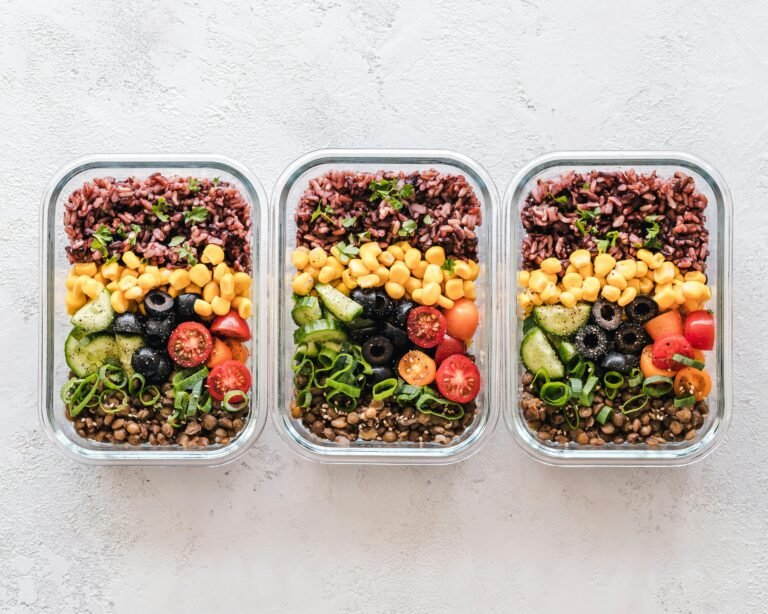
How I Cut Our Grocery Bill by $400/Month Without Coupons
Three years ago, I stood in the grocery store checkout line watching the total climb: $287. For one week. For a family of four.
I felt sick. We weren’t buying anything extravagant—no organic everything, no fancy cuts of meat, no prepared meals. Just regular groceries. But somehow, we were spending over $1,200 per month on food.
I knew something had to change. Our budget was stretched thin, and grocery spending was the biggest variable expense we could control. But here’s what I wasn’t willing to do: spend hours clipping coupons, drive to five different stores for deals, or feed my family ramen every night.
I needed realistic strategies that actually worked for busy families.
Fast forward to today: our monthly grocery bill averages $800—and we eat better than we did before. That’s $400 back in our budget every single month, or $4,800 per year. We accomplished this without extreme couponing, without sacrificing nutrition, and without spending all weekend meal planning.
In this post, I’m sharing the exact strategies I used to reduce grocery spending by one-third. These aren’t trendy hacks or unsustainable tricks—they’re practical grocery budget hacks that work for real families with real schedules and real appetites.
Let’s get your grocery spending under control.
Why Grocery Bills Spiral Out of Control
Before I share what worked, let’s talk about why grocery spending gets so high in the first place. Understanding this changed everything for me.
The Real Culprits
No meal plan equals impulse buying. When you don’t know what you’re cooking, you buy everything that looks good “just in case.” This leads to overbuying, food waste, and expensive last-minute takeout when nothing seems appealing.
Shopping hungry or tired. After work, hungry, with kids in tow—this is when the most expensive shopping happens. Everything goes in the cart because you’re making decisions from a place of desperation, not strategy.
Buying convenience without calculating cost. Pre-cut vegetables, single-serve packages, grab-and-go meals—convenience has a massive markup. Sometimes it’s worth it. Often, it’s not.
Protein-heavy American eating patterns. We’re taught that every dinner needs a large meat portion. When meat is your meal centerpiece every night, costs skyrocket.
Grocery stores are designed to make you spend. The bakery smell when you walk in, essential items in the back corners, eye-level placement of expensive brands, endcap “deals” that aren’t actually deals—everything is strategic.
My Breaking Point
The week I spent $287, I came home and actually looked at what I’d bought. Half of it we didn’t need. A quarter of it would probably go bad before we used it. And I’d grabbed $40 worth of “quick dinner” items because I hadn’t planned ahead.
I wasn’t failing at grocery shopping. I was shopping without a system. And without a system, you’re set up to overspend every single time.
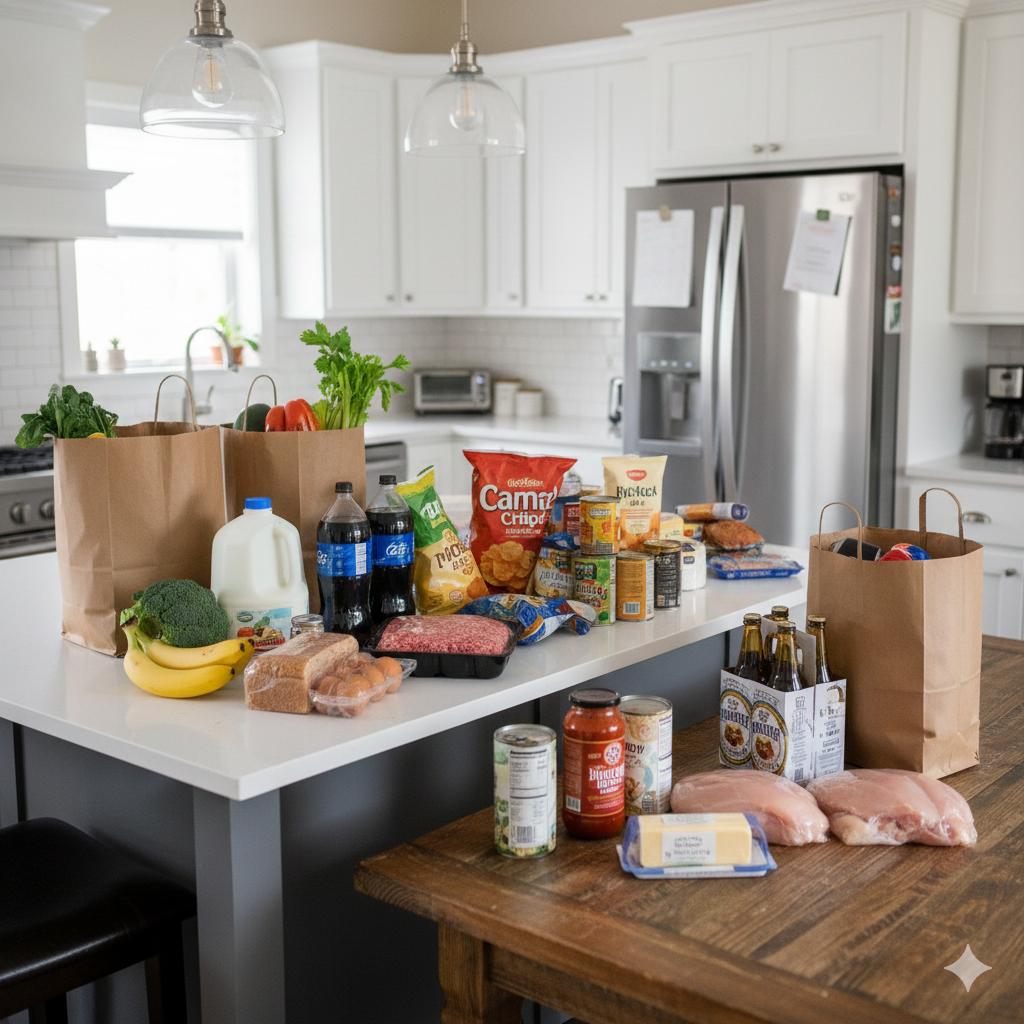
Strategy #1: The Reverse Meal Plan
This is the strategy that saved us the most money immediately—probably $150/month just from this alone.
How Most People Meal Plan (And Why It’s Expensive)
Traditional meal planning works like this:
- Decide what you want to eat this week
- Write a shopping list
- Buy everything you need
- Cook those meals
The problem? You’re building your meal plan around recipes and cravings, not around what’s affordable this week. You end up buying whatever those recipes require, regardless of price.
The Reverse Meal Plan Method
Here’s what I do instead:
Step 1: Check your pantry, freezer, and fridge first. Before planning anything, I inventory what we already have. I find half-used packages, forgotten proteins in the freezer, and cans of beans I forgot I bought.
Step 2: Build meals around what you already own. If I have chicken in the freezer, pasta in the pantry, and frozen vegetables, I’m planning a chicken pasta dish. If I have ground beef and taco shells, it’s taco night.
Step 3: Check this week’s sale items. Look at your local grocery store’s weekly ad online (you don’t need to physically clip anything). What proteins are on sale? What produce is discounted?
Step 4: Plan 4-5 flexible meals. I don’t plan seven specific dinners anymore. I plan 4-5 meals, plus one “breakfast for dinner” night, and one leftovers/clean-out-the-fridge night.
Step 5: Shop ONLY for what you need to complete those meals. The list is short. The cart stays manageable. The bill stays low.
Why This Works
You’re spending zero dollars on ingredients you already own. Using what you have first means that $30 chicken breast pack in your freezer gets used instead of buying another one.
You buy what’s cheap this week. When pork is on sale, we eat pork. When it’s not, we don’t. This single habit probably saves us $50-75/month.
You stop impulse buying. With a focused list, you’re less likely to wander aisles throwing random items in your cart.
Strategy #2: Master the Cost-Per-Meal Calculation
This changed how I shop completely. I stopped thinking about recipes and started thinking about cost per meal.
The Simple Math
For our family of four, I target $8-10 per dinner. That’s $2-2.50 per person per meal. Some meals cost more (like when we have steak), others cost less (like pasta night), but it averages out.
Here’s how to calculate:
Total ingredient cost ÷ Number of servings = Cost per serving
If a recipe needs $24 in ingredients and makes 6 servings, that’s $4 per serving—expensive for our budget. If it needs $18 and makes 8 servings, that’s $2.25 per serving—perfect.
How I Use This
When I’m planning meals, I mentally price them:
Expensive meals (over $12 total):
- Steak dinners
- Fresh fish
- Recipes requiring multiple specialty ingredients
- Heavy cheese dishes
Moderate meals ($8-12 total):
- Chicken dishes
- Ground beef tacos or pasta
- Pork chops with sides
- Casseroles with meat
Cheap meals (under $8 total):
- Pasta with marinara
- Bean and rice bowls
- Breakfast for dinner (pancakes, eggs)
- Soup with bread
- Vegetarian stir-fry
I intentionally plan 2-3 cheap meals every week. This gives me budget room for one nicer meal or accounts for weeks when prices are higher.
The Game-Changer Realization
You don’t need expensive protein at every meal. Some of our family’s favorite dinners cost under $6 total: spaghetti with garlic bread, bean and cheese quesadillas with rice, veggie fried rice with eggs.
Americans are protein-obsessed to the point of overspending. You don’t need a $15 package of chicken breasts for Tuesday dinner. A $3 can of beans works just fine.

Strategy #3: Strategic Protein Buying
Protein is usually the most expensive part of any meal. Control your protein spending, and you control your grocery bill.
The Protein Budget Rule
I allocate about 40% of my grocery budget to protein—roughly $320 of our $800 monthly budget. This includes meat, eggs, dairy, beans, and tofu.
How I stretch protein budget further:
Buy What’s On Sale This Week
I never pay full price for meat anymore. Ever. If chicken isn’t on sale this week, we’re not eating chicken this week. If ground beef is marked down, we’re eating ground beef.
My price targets (adjust for your area):
- Chicken breast: Under $3/lb
- Ground beef: Under $5/lb
- Pork chops: Under $3.50/lb
- Whole chicken: Under $1.50/lb
- Ground turkey: Under $4/lb
If it’s not hitting these prices, I don’t buy it.
Embrace “Boring” Proteins
The cheapest proteins are the ones Americans overlook:
Eggs: About $0.20-0.30 each. Breakfast for dinner, fried rice, frittatas, egg salad—extremely versatile.
Canned beans: $0.80-1.20 per can, makes 3-4 servings. That’s about $0.25-0.40 per serving for protein.
Dried beans: Even cheaper if you’re willing to soak and cook them. $1.50 for a pound that makes 10+ servings.
Canned tuna or chicken: Not exciting, but $1-2 per can makes multiple meals.
Whole rotisserie chicken: Often $5-7 and provides 3 meals: dinner the first night, shredded chicken for tacos or pasta the second, soup with the carcass the third.
Reduce Portion Sizes
Americans typically eat 6-8 ounces of meat per meal. We’ve cut that to 3-4 ounces per person by bulking meals with vegetables, grains, and beans.
Instead of: Large chicken breast as the star, small sides
We do: Moderate chicken in a stir-fry with tons of vegetables and rice
Instead of: Big pork chop with minimal sides
We do: Sliced pork in tacos with beans, lettuce, cheese, salsa
The meal feels just as satisfying, but protein costs drop by 40-50%.
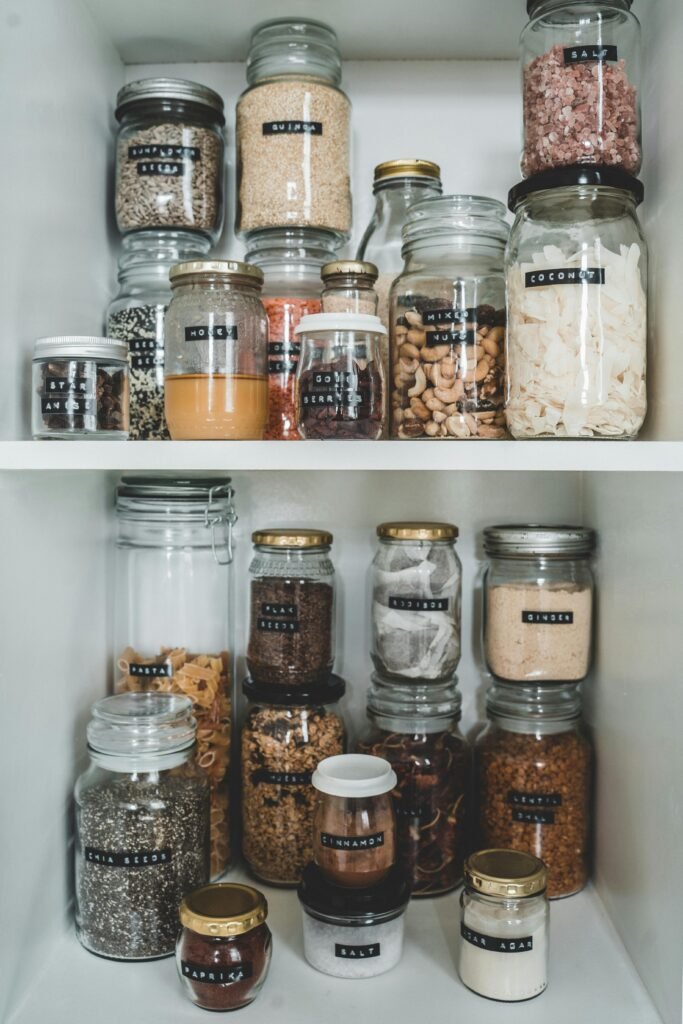
Strategy #4: The Pantry Staples Investment
This sounds counterintuitive—spending more upfront to save money—but it works.
What I Always Keep Stocked
I maintain a working inventory of pantry staples that let me make dozens of meals without special shopping trips:
Grains & Pasta:
- White rice (huge bag from bulk store)
- Pasta (multiple shapes)
- Oats
- Flour
Canned Goods:
- Black beans (6-8 cans)
- Diced tomatoes (4-6 cans)
- Tomato sauce and paste
- Corn
- Tuna
Seasonings & Sauces:
- Basic spices (garlic powder, onion powder, cumin, chili powder, Italian seasoning)
- Soy sauce
- Hot sauce
- Vinegar
- Bouillon cubes
Baking Basics:
- Sugar
- Brown sugar
- Baking powder
- Baking soda
- Vanilla extract
Why This Investment Saves Money
You can make complete meals from almost nothing. Rice, beans, and frozen vegetables make a complete dinner for under $5.
You don’t pay convenience prices. When you’re out of rice and need it for one recipe, you grab the small expensive box. When you buy a 20-pound bag when it’s on sale, your per-meal cost plummets.
You’re never “out” of dinner options. Even on weeks when the budget is maxed, I can feed my family from pantry staples.
You avoid emergency shopping trips. Those quick runs for “just one thing” always turn into $30-40 spent on impulse items.
The Rotation System
Every 2-3 months, I deeply inventory the pantry and plan meals around whatever is approaching expiration or needs to be used. This prevents waste and forces creativity.
Strategy #5: Redefine “Cheap” Meals
I used to think cheap meals meant ramen, hot dogs, and mac and cheese from a box. Not anymore.
The Actual Cheap Meals That Don’t Feel Cheap
These are dinners my family requests regularly—and they cost $6-10 for four people:
Sheet Pan Roasted Vegetables and Sausage ($8)
Slice whatever vegetables are cheap (potatoes, carrots, broccoli), add kielbasa or Italian sausage, toss with oil and seasonings, roast at 400°F for 30 minutes.
Taco Bowl Bar ($9)
Cook rice, heat canned black beans, set out shredded cheese, lettuce, salsa, sour cream. Everyone builds their own bowl. Add $4 ground beef if budget allows.
Breakfast Burritos ($7)
Scrambled eggs, cheese, salsa, and tortillas. Takes 10 minutes. Kids love it.
Pasta with Marinara and Garlic Bread ($6)
Box of pasta, jar of sauce (or make it from canned tomatoes), frozen garlic bread. Add frozen meatballs if budget allows.
Fried Rice ($5)
Leftover rice, frozen mixed vegetables, scrambled eggs, soy sauce. Use up any leftover meat if you have it.
Bean and Cheese Quesadillas with Spanish Rice ($7)
Canned refried beans, shredded cheese, tortillas. Make rice with tomato sauce and seasonings.
Baked Potato Bar ($8)
Large baking potatoes, toppings bar (cheese, sour cream, bacon bits, broccoli, chili). Everyone customizes their potato.
The Shift in Thinking
Cheap doesn’t mean low quality or unhealthy. Beans, rice, eggs, and vegetables are cheap AND nutritious. Processed convenience foods are expensive AND less healthy.
Simple doesn’t mean boring. The meals above take 20-30 minutes and use basic ingredients, but they’re satisfying and family-approved.
Strategy #6: The 80/20 Shopping Rule
I spend 80% of my grocery budget on the same 20 items every single week. This creates massive savings through bulk buying and efficiency.
My Core 20 Items
These are what we buy almost every week:
- Eggs (2-3 dozen)
- Milk (2 gallons)
- Bread (2 loaves)
- Bananas
- Apples
- Whatever protein is on sale
- Rice
- Pasta
- Canned beans (3-4 cans)
- Canned tomatoes (2-3 cans)
- Shredded cheese (2 bags)
- Butter
- Frozen vegetables (3-4 bags)
- Onions
- Potatoes
- Carrots
- Lettuce or salad greens
- Peanut butter
- Tortillas
- Seasonal fruit on sale
Everything else is occasional. Specialty ingredients, treats, new recipes—these account for the remaining 20% of spending.
Why This Works
You know exactly what you need. Shopping becomes almost automatic. I can do our weekly shop in 30 minutes because I’m not wandering aisles trying to remember what we need.
You can buy in bulk when it makes sense. Since we use eggs constantly, buying 5 dozen when they’re on sale makes sense. We’ll use them.
You reduce decision fatigue. Fewer choices means faster shopping and less impulse buying.
Your family knows what to expect. Yes, we eat a lot of the same meals in rotation. That’s okay. It’s budget-friendly, and nobody actually complains.
Strategy #7: Smart Substitutions
Learning strategic swaps saved us about $50/month immediately.
High-Impact Swaps
Instead of pre-shredded cheese → Buy blocks and shred yourself
Saves: $2-3 per week, $100-150/year
Takes: 3 minutes
Instead of name-brand cereal → Store brand or oatmeal
Saves: $3-4 per week, $150-200/year
Quality: Virtually identical
Instead of individual yogurt cups → Large container, portion into reusable containers
Saves: $4-5 per week, $200-250/year
Bonus: Less packaging waste
Instead of bagged salad → Buy heads of lettuce and chop
Saves: $2-3 per week, $100-150/year
Takes: 5 minutes
Instead of pre-marinated meat → Buy plain, marinate yourself
Saves: $3-5 per package
Takes: 2 minutes
Instead of fresh herbs for recipes → Use dried herbs
Saves: $2-3 per recipe
Exception: When fresh herbs ARE the recipe (pesto, chimichurri)
Instead of bottled water → Reusable bottles and tap water
Saves: $5-8 per week, $250-400/year
Investment: $20 in good reusable bottles
The Psychology of Substitutions
At first, these swaps felt like sacrifices. Now they feel smart. The money I save on cheese blocks gets redirected to better quality meat or treats we actually care about.
You’re not depriving yourself. You’re making intentional choices about where your grocery dollars go.
Strategy #8: The Two-Store Strategy (When It Makes Sense)
I used to shop at one grocery store. Now I strategically use two—and it saves about $80/month.
My System
Store 1 (Discount grocery like Aldi or Walmart):
Buy 80% of groceries here: staples, dairy, eggs, bread, canned goods, frozen vegetables, basic produce.
Store 2 (Regular grocery store):
Buy specific items: quality meat when on sale, specialty produce, specific brands that matter to me.
The Rules
Only go to Store 2 if you’ll save at least $15. Factor in gas and time. If Store 1 meets 90% of your needs, don’t make the second trip.
Never wander aimlessly at Store 2. Strict list only. Get in, get out.
Don’t shop at three or more stores. The time and gas cost erases savings. Two is the maximum efficiency point.
When To Skip The Two-Store Strategy
If stores aren’t convenient to each other, stick with one. If you have very young children, reducing shopping trips matters more than $20 in savings. If your time is extremely limited, streamline to one store.
The goal is saving money, not creating a second job.
The Results: Where Our $800 Monthly Budget Goes
Here’s our current monthly breakdown for a family of four (2 adults, 2 kids under 10):
- Protein (meat, eggs, dairy): $320 (40%)
- Produce (fresh and frozen): $160 (20%)
- Grains, pasta, bread: $120 (15%)
- Pantry staples and canned goods: $80 (10%)
- Snacks and treats: $80 (10%)
- Miscellaneous (spices, condiments, etc.): $40 (5%)
Total: $800/month or about $185/week
Compare this to our old spending:
- Old monthly: $1,200
- New monthly: $800
- Savings: $400/month or $4,800/year
What I Don’t Do (And Why That’s Okay)
Let me be clear about what I’m NOT doing to save money:
❌ Extreme couponing – Too time-intensive, often leads to buying things you don’t need
❌ Shopping at 5+ stores – Gas and time aren’t worth minimal extra savings
❌ Making everything from scratch – Some convenience is worth paying for
❌ Growing my own food – Great if you have time and space; we don’t
❌ Only eating beans and rice – We still have treat meals and quality protein
❌ Depriving my family – Kids still get their favorite snacks, just more intentionally
Sustainable grocery savings comes from systems, not sacrifice.
Common Mistakes That Keep Grocery Bills High
Even with good intentions, these mistakes sabotage savings:
Shopping Without a List
The damage: Average overspending of $50+ per trip. Those impulse buys add up fast.
The fix: Meal plan first, list second, shop third. In that order. Always.
Shopping Too Frequently
The damage: Multiple trips per week mean multiple opportunities to overspend. Each “quick trip” costs $20-40 in extras.
The fix: One big shop per week, maximum. Plan well enough that you’re not making emergency runs.
Throwing Away Food
The damage: Americans waste 30-40% of food. If you’re spending $800/month and wasting 30%, you’re throwing away $240/month.
The fix: Use-it-up meals once per week. Check your fridge before shopping. Freeze what you can’t use in time.
Buying Sale Items You Don’t Need
The damage: It’s only a deal if you’ll actually use it. “Buy one get one” on food you wouldn’t normally buy isn’t savings.
The fix: Stock up on sale items you use regularly. Ignore sale items you don’t.
Not Tracking Spending
The damage: You can’t improve what you don’t measure. Most people guess they spend less than they actually do.
The fix: Track every grocery receipt for one month. The awareness alone will change your behavior.

Your Action Plan: Start This Week
Don’t try to implement everything at once. Here’s your realistic roadmap:
Week 1: Awareness
- Track every dollar you spend on groceries this week
- Calculate your current monthly average
- Don’t change anything yet—just observe
Week 2: Reverse Meal Planning
- Inventory your pantry, fridge, and freezer
- Plan 4 meals using what you have
- Check your store’s weekly ad for sales
- Shop with a strict list
Week 3: Strategic Protein
- Buy only proteins on sale this week
- Try one “cheap” meal (beans, eggs, or pasta-based)
- Calculate cost-per-serving for your meals
Week 4: Smart Substitutions
- Implement 2-3 swaps from the list above
- Buy store brand instead of name brand on staples
- Track your savings
Week 5 and Beyond
- Continue refining your system
- Add new strategies as previous ones become habits
- Celebrate your progress
The Bigger Picture: What $400/Month Really Means
This isn’t just about groceries. That $400 monthly savings is $4,800 per year.
Here’s what that money can do:
- Fund a family vacation
- Build a 3-month emergency fund in one year
- Pay off a credit card
- Max out a Roth IRA contribution
- Cover unexpected medical expenses
- Start a college savings fund
- Simply breathe easier knowing you have a cushion
Controlling your grocery spending creates breathing room in your entire budget. It reduces stress. It gives you options. It proves you’re in control of your money, not the other way around.
The Truth About Grocery Budget Success
Three years into this journey, here’s what I know for sure:
It gets easier. The first month of meal planning and strategic shopping feels like work. By month three, it’s automatic. Your new habits become default behaviors.
Your family adapts. My kids occasionally ask why we don’t buy certain snacks anymore. I explain we’re choosing to spend money on things we care about more. They understand.
You stop feeling deprived. Once you see the money piling up in savings or going toward something meaningful, you don’t miss the impulse purchases.
Small changes compound. You don’t need to cut $400 immediately. Cut $50 this month, another $50 next month. Progress builds.
This is a skill, not a sacrifice. You’re learning to reduce grocery spending through strategy, not deprivation. These grocery budget hacks aren’t tricks—they’re systems.
Take Control of Your Grocery Spending Today
You now have the exact strategies I used to cut our grocery bill by $400 per month. No coupons. No extremes. Just practical, sustainable systems that work for busy families.
The question is: what will you do with this information?
You can keep spending what you’re spending, feeling stressed every time you checkout, wondering where your money is going. Or you can implement one strategy this week and start seeing results.
Pick one thing from this post. Just one. Maybe it’s reverse meal planning. Maybe it’s calculating cost-per-meal. Maybe it’s trying two cheap meals this week.
Start small. Build momentum. Watch your grocery bill drop.
Your family’s financial future is built one decision at a time. Grocery spending is one of the biggest opportunities you have to take control.
Ready to Take Your Family’s Finances Further?
Cutting your grocery bill is just one piece of building a strong financial foundation. If you’re serious about taking control of your money, automating your finances, and creating the life you want for your family, I have more resources to help.
Download my free budget spreadsheet specifically designed for busy moms like you. It includes:
✓ Monthly budget tracker
✓ Grocery spending calculator
✓ Debt payoff planner
✓ Savings goal tracker
Stop wondering where your money goes. Start telling it where to go.
Your journey to financial confidence starts with one decision: the decision to take control. You’ve already taken the first step by reading this post.
Now take the next one.
Ready to master your money? Get the free budget spreadsheet and start building the financial future your family deserves.